Moisture source
Look for damp soil, condensation, wet insulation, odors, and water entry patterns after rain.
Floor support request help
Use this page when floors feel soft, bouncy, uneven, or sloped and the crawl space may need a joist, beam, pier, moisture, or support review.
Disclosure: Hickory Crawl Space Help is an independent lead-generation website. We do not perform contractor services directly. Requests may be connected with a local crawl-space or foundation service provider.
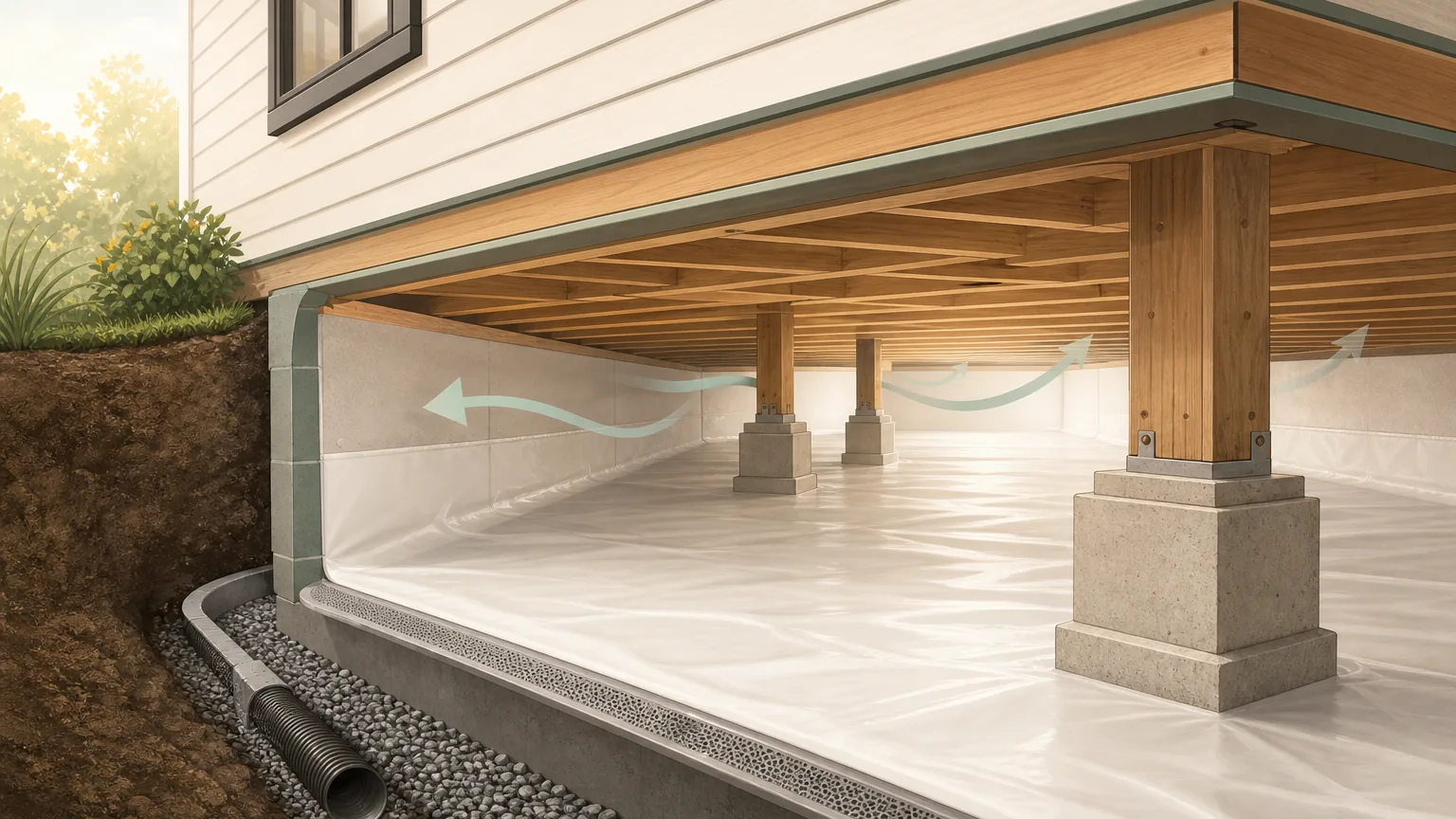
Homeowner request path
Hickory, NCBouncy, sloping, uneven, or soft floors can point to crawl-space moisture, floor joist concerns, beam movement, support pier issues, or wood damage. A visual crawl-space review helps separate moisture problems from support concerns.
Use caution with floor problems. A qualified provider can inspect joists, beams, piers, posts, water sources, and vapor barrier condition before explaining possible next steps.
Look for damp soil, condensation, wet insulation, odors, and water entry patterns after rain.
Check whether the ground cover is missing, torn, thin, loose, dirty, or no longer sealed where it matters.
Downspouts, low spots, groundwater, and heavy rain can push water under the home.
Soft floors, bouncy rooms, joist staining, or wood decay concerns may need prompt review.
Related pages: Review moisture control, review waterproofing, compare crawl space encapsulation, check vapor barrier options, and request crawl space repair help.
Helpful homeowner guidance
The points below explain why moisture, odor, insulation, and water details matter when you request crawl-space help.
Sources: EPA mold and moisture guide, North Carolina crawl-space mold study
Disclosure: Hickory Crawl Space Help is an independent lead-generation website. We do not perform contractor services directly. Requests may be connected with a local crawl-space or foundation service provider.
No. Hickory Crawl Space Help is an independent lead-generation website. Requests may be connected with a local crawl-space or foundation service provider.
Common signs include musty odors, standing water, damp soil, torn vapor barrier material, wet insulation, soft floors, bouncy floors, and visible wood moisture concerns.
Moisture can contribute to wood movement, decay concerns, and weakened floor framing. A qualified provider can inspect the crawl space and explain what appears to be causing the floor issue.
No. A vapor barrier mainly covers exposed soil to reduce ground moisture. Encapsulation is usually a larger moisture-control system that may include sealed liner seams, wall coverage, vent sealing, drainage planning, and humidity control.
Do not crawl through standing water yourself. Take photos from the access opening if safe, note when the water appears, and request help so drainage, grading, vapor barrier condition, and sump needs can be reviewed.
Cost depends on crawl-space size, access, moisture severity, drainage needs, vapor barrier condition, encapsulation scope, floor-support concerns, insulation condition, and whether a dehumidifier is needed.